Why Does the Whole Crypto Market Fall at Once?
Thousands of unrelated tokens routinely drop together on the same afternoon. That correlation is not coincidence, and understanding the four mechanisms behind it explains most red days.
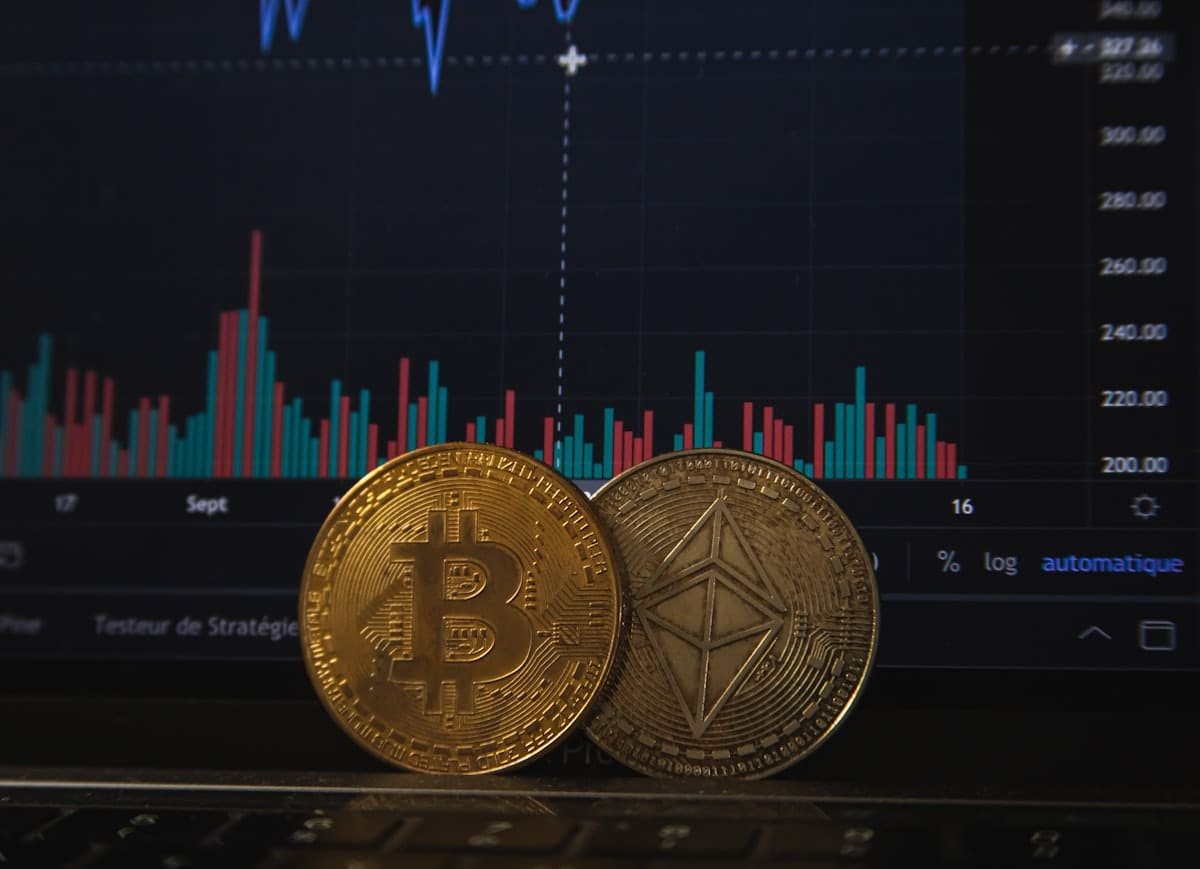
Open any market page on a bad day and the pattern is the same: hundreds of tokens, from established networks to projects with nothing in common, all down by similar percentages within the same few hours.
These assets have different technology, different teams, different users and different purposes. They should not move together. They do, reliably, and the reasons are structural rather than mysterious.
One: there is almost nothing asset-specific to price on
Most tokens produce no cash flows. There are no earnings, no dividends, no coupon.
In equity markets, a company reporting good results can rise on a day the index falls, because there is asset-specific information to separate it from everything else. That is what decorrelation is made of.
Strip out cash flows and very little of that separating information remains. What is left is a common factor: how much speculative capital exists and how willing it is to take risk. When that single factor moves, everything priced on it moves together.
This is the deepest reason, and it is not fixable by any individual project. A token with genuine usage still trades primarily on the same factor as one without, because neither has earnings to anchor it.
Two: leverage turns a decline into a cascade
Crypto markets carry substantial leverage relative to their size, available continuously, to anyone.
The mechanism is mechanical:
- Prices fall for whatever reason.
- Leveraged long positions approach their liquidation thresholds.
- Positions are liquidated, which means forced selling into a falling market.
- That selling pushes prices lower.
- Which triggers the next tier of positions.
Note what is absent: any new information about any project. The positioning alone is sufficient. This is why so many sharp moves are followed by commentary struggling to identify a cause — there frequently is no cause beyond the structure of the market itself.
The same runs in reverse on the upside, where short positions are squeezed.
Open interest and funding rates give a rough read on how much of this fuel is loaded at any time.
Three: almost everything is priced against Bitcoin or a stablecoin
This one is plumbing, and it is underappreciated.
For most tokens, the deepest and most liquid market is not against dollars. It is against Bitcoin, Ethereum or a stablecoin.
So when Bitcoin falls against the dollar, a token whose main pair is denominated in Bitcoin mechanically falls in dollar terms even if its price in Bitcoin has not moved at all. The transmission is arithmetic, not sentiment.
Add to this that Bitcoin is where most institutional flow enters and exits the asset class, and it functions as the market's transmission point: capital arrives through it and leaves through it, and everything downstream moves accordingly.
Four: liquidity disappears exactly when it is needed
Market makers quote continuously, and they are not obliged to.
When volatility spikes, the risk of holding inventory rises sharply, so they widen spreads and shrink the size they will trade. That is a rational commercial response, not abandonment.
The consequence is that depth is a service, not a property. A token that traded millions of dollars at a tight spread on a calm day can have very little depth during a decline. The same quantity of selling therefore moves the price much further than the previous week's volume figures would suggest.
This is why smaller tokens fall further than large ones in a general decline. It is not that the market has re-evaluated their prospects. It is that there is nobody on the other side.
The macro layer above all of it
Sitting above these four is the condition that drives the common factor: global liquidity.
Crypto assets sit at the far end of the risk curve — the last things bought when capital is abundant and the first sold when it is not. So central bank policy, credit conditions and general risk appetite move the whole asset class together, and they move it in the same direction as other long-duration risk assets.
This is the mechanism behind the correlation with technology stocks that puzzles people. There is no fundamental link between a payment network and a software company. The link is the buyer.
What this means practically
A market-wide fall usually says nothing about any individual project. If everything is down 8%, the information content about the token you hold is close to zero.
Diversifying across many tokens is not diversification. Twenty positions driven by one common factor is one position with extra transaction costs. Genuine diversification requires assets driven by different factors.
Expect drawdowns to be deeper in smaller assets. Not because they are worse, but because they are thinner.
Be sceptical of explanations offered within the hour. Most sharp moves have no discrete cause, and the narrative arrives afterwards to fill the gap.
What to watch instead of the headline
- Financial conditions and central bank direction, which drive the common factor.
- Open interest and funding rates, for how much leverage is loaded.
- Exchange balances, as a proxy for supply positioned to sell.
- Correlation with equity indices — when it rises, macro is dominating; when it falls, something crypto-specific is happening.
The bottom line
The whole market falls at once because most of it is priced on one variable, leverage amplifies moves in both directions, the plumbing transmits Bitcoin's price across everything, and liquidity withdraws precisely when selling arrives.
None of that requires bad news. It is what the market's structure produces on an ordinary day when capital decides to leave.
This article is educational and is not financial advice. Cryptocurrency is highly volatile and you can lose your entire investment.
Frequently asked questions
Why do altcoins fall when Bitcoin falls?+
Partly because the deepest trading pairs for most tokens are denominated in Bitcoin or a stablecoin rather than in fiat, so a Bitcoin move transmits mechanically. Partly because the same pool of speculative capital funds all of them, and when that capital retreats it retreats from everything at once, starting with the least liquid.
Is there always a news reason when crypto drops?+
Frequently not. A large share of sharp moves are driven by positioning rather than information: leveraged positions hit liquidation thresholds, forced selling pushes the price lower, and that triggers the next tier. No new fact about any project is required for this to happen.
Why do smaller tokens fall further than Bitcoin?+
Because they are thinner. The same amount of selling moves a shallow order book much further, and in a decline liquidity providers widen spreads and reduce the size they will trade, so depth disappears exactly when sellers arrive.
Does crypto really move with tech stocks?+
The correlation is not constant, but it has been strong during liquidity shocks. Both are long-duration risk assets bought with the same speculative capital, so when financial conditions tighten that capital retreats from both. Treating crypto as an uncorrelated diversifier has repeatedly failed at the moment diversification mattered.
Sources and further reading
Risk warning
Trading cryptocurrencies, forex and leveraged derivatives involves substantial risk of loss and is not suitable for every investor. Our content is journalism and education — never personalised financial advice. Full disclaimer.
Published by
Trading News GlobalTrading News Global is an independent publication. Our articles are researched, written and edited in-house against the standards set out in our editorial policy, and published under the newsroom byline rather than individual names. Responsibility for everything on this site sits with the publication, and every article carries a route to correct it.